Tanaka Mutakwa

Ideas for pushing yourself to succeed in your goals and ambitions, building habits that stick and doing great work.

My name is Tanaka Mutakwa. I'm a Software Engineering Leader | Organiser of Tech Leadership | Co-owner at Pahari African Restaurant | Founder of NoDaysOff Lifestyle Brand | Runner | Talks / Podcasts

About / Mission Statement
  • Facebook
  • Instagram
  • LinkedIn
  • Twitter
© 2015 Tanaka Mutakwa.

Your fears can help you

March 19, 2015 By Tanaka Mutakwa Leave a Comment

fears

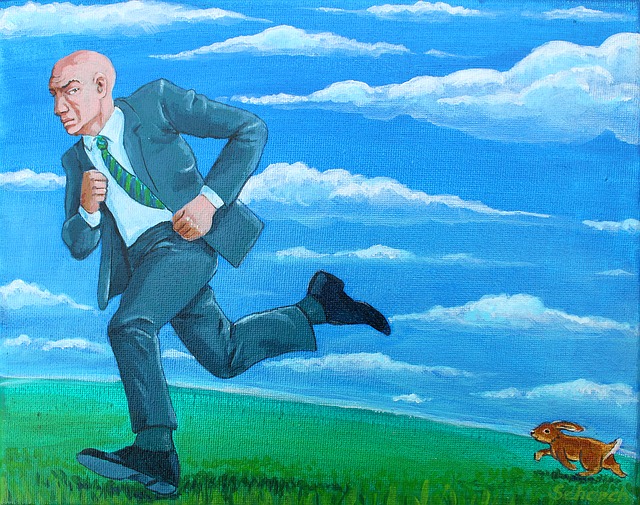
Brian Tracy is the author of Goals!: How to Get Everything You Want — Faster Than You Ever Thought Possible. He grew up with a fear of poverty. He feared not having enough money, being broke, and being destitute. Brian knew that this fear had originated during his childhood because his parents, who grew up during the Depression had continually worried about money. His fear was reinforced when he was broke at various times in his twenties. Even when he had sufficient money, this fear was always there. This fear of poverty held Brian back. It caused him to be anxious about taking risks with money. It caused him to play it safe with regard to employment. It caused him to choose security over opportunity.

Move toward your fears

One day Brian went through an exercise to objectively determine the origins of this fear. In that exercise he had to answer the question “How does this fear help me, or how has it helped me in the past?” In answering this question he realised his fear of poverty had actually made him a better person. In order to escape the fear of poverty, Brian had developed the habit of working much longer and harder than the average person. He was more ambitious and determined. Brian took much more time to study and learn about the various ways that money could be made and invested. The fear of poverty had, in effect, driven him toward financial independence.

Fear, the worst of all enemies, can be effectively cured by forced repetition of acts of courage.

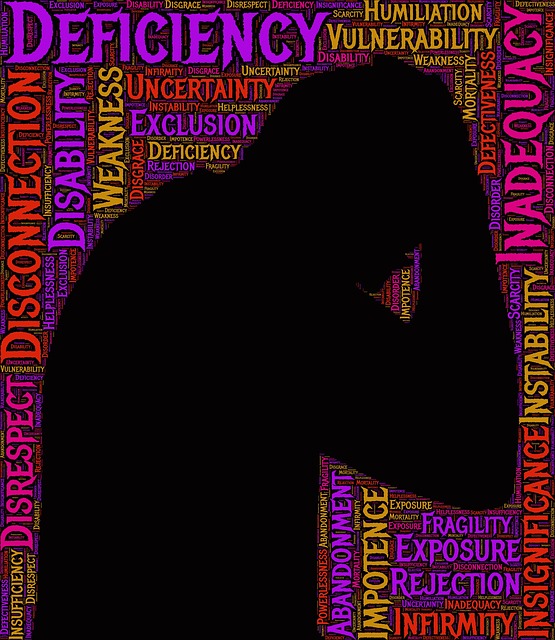
We all have fears (failure, rejection, poverty, etc) that hold us back. How you perceive the fear makes a difference. The actions you take because of fear make a difference. You need to sit down and take the time to objectively identify, define and analyse your own personal fears. Once you understand what each of your fears are, you need to ask yourself “How does this fear help me, or how has it helped me in the past?” You can then begin the process of developing courage and eliminating fear by engaging in actions that allow you to move past your fears.

I am an old man and have known a great many troubles, but most of them never happened. – Mark Twain

Fears can dominate you to the point where your actions are paralysed. Understand that most of the time fear is an indicator of exactly where you should go. By moving toward his fear of poverty, Brian Tracy was able to begin the process of eliminating it. So can you.
Filed Under: General Interest

When I go through bad times

March 12, 2015 By Tanaka Mutakwa 1 Comment

depressed

Life does not always go our way. We all go through emotional struggles, failed relationships, work stress, loss of a loved one and so on. We may also experience physical struggles such as lack of sleep, injuries, illness or general ill-being. Going through a rough patch is tough as one might not feel good about one’s life and constantly wondering why things are happening the way they do. You feel helpless, hopeless and depressed about your state of being.

Over the last few years I have adopted methods to make transitioning through the storms easier. I learnt this approach at a resilience training workshop I attended two years ago. I have come across the same approach in many books and blogs. So how does one take the steps towards recovery from a rough patch?

Gratitude: Appreciate the goodness in your life

The answer to coming out of a rough patch in life is gratitude, being thankful about something or someone in your life right now. When we go through a rough patch we tend to spend most of our time focusing our minds on the problem. As a result we forget the positive aspects of our life and the world around us. My strategy is to change that focus and use gratitude to focus on things that I am thankful for. Take time to ponder, think about life and create a list of things you are thankful for. If I had to write down my gratitude list today it would include:

  1. I have a loving family and great parents who are supportive of my pursuits and dreams.
  2. I have a great core set of friends that I share experiences with and learn continuously from.
  3. I am healthy.
  4. I have a great job in a field I enjoy working in, at a company that does work that aligns well with my values.
  5. I can afford decent and safe accommodation as well as to eat healthy food everyday.
  6. I live in a beautiful city.
  7. I have the freedom to live the lifestyle I want to live.
  8. I can afford and have access to many learning resources (internet, kindle books, etc).
  9. I am inspired by other people everyday and I try do the same for others too.
  10. I am alive.

Going through this gratitude exercise allows me to focus on the positive aspects of my life. This lets me reduce the impact of my negative situation. Some recommend doing the gratitude exercise everyday. This will ensure you consistently keep perspective of the positive things in your life. You will start to appreciate people and things around you more. I have found the gratitude exercise most beneficial for me in difficult times. I am reminded that I am still ok, even when things seem horrible around me. Gratitude is the first step in bouncing back, to reclaiming one’s happiness. This is  why I find that these days I hardly spend a long time facing a bad time in my life.

You will come across obstacles in life, fair and unfair. And you will discover, time and time again, that what matters most is not what these obstacles are but how we see them, how we react to them, and whether we keep our composure. You will learn that this reaction determines how successful we will be in overcoming, or possibly thriving because of them.

Next time you are going through a rough patch, give the gratitude exercise a try and see what happens.

Filed Under: General Interest

Why I do not watch the news

March 10, 2015 By Tanaka Mutakwa 1 Comment

News

I have not intentionally watched the news on television in a long time. Initially this transition just happened organically, but then I eventually made an explicit call that I will not spend my time watching news on television. We live in an information and device filled world where the demand for our attention is high. Journalists or reporters under no fault of their own have resorted to going out in the world to try and find news that is so dramatic and captures our attention. News outlets, facing pressure from an endlessly multiplying array of competitors all zeroing in on the same stories have greater incentive than ever before to ramp up their coverage of scary, emotionally wrenching stories.  The side effect of this is that most of the news reported on is negative (unemployment, corruption, accidents, natural disasters, murders, war, etc). Some studies done in the past found about 70% of news reports are negative.

Try it yourself, next time you are watching television. Switch to one of the news channels and take stock of the amount of negative content being pushed out. I struggle to find the times where after watching news, I learned something that I can apply and use to grow myself as an individual. I used to find myself rather surprised at how so many negative things can be happening in the world. It can leave you with very negative perceptions about a world which when balanced has a lot of good stories to tell too. Especially given that most of the negative stories reported, there is not much you can do about them as an individual. Leaving you in a state of learned helplessness. I am not saying negative news should not be reported, however I feel there is a gross imbalance on the scale, mainly weighted toward the negative reports.

One may argue that watching the news allows you to learn about the important things happening around the world. This is valid, and it is important to understand the world we live in and what is happening around us. I have found the important news tends to manifest itself through other channels in any case. At work water-cooler or lunch lime conversations with colleagues, or over a night out with friends or family for example.

So I prefer to spend my time consuming constructive media that I select for myself, media that is educational and informative that I can apply in my life so I can grow. This often comes in the form of books and podcasts. This is a choice I have made, and the media you choose to consume is your own choice, we have this freedom.

Do yourself a favor, next time you watch news on television, take note of the number of negative stories being reported, or more importantly after watching a news broadcast for 30 minutes to an hour take note how much value it has added to your life.

Of course, it’s both unrealistic and undesirable to construct bubbles that keep out the world’s bad news. But there’s a difference between being informed and being obsessive, and it’s a line that’s very easy to accidentally slide across in an age when there’s so much scary information zipping around. In the mean time, I have decided to just turn the news off.

Filed Under: General Interest

Learn Something New Every Day

March 5, 2015 By Tanaka Mutakwa 1 Comment

learn

As I am growing older, I am realising how important knowledge really is. Imagine if we were to ask someone 100 years from now what puzzles them about people who lived in our century. I’d guess they would say:

Those people  walked around with devices that had access to all the information about the world they  lived in, yet, they spent all their  time on these devices playing candy crushing games, on social networks and chatting to each other.

The world we live in has so much to offer and so much to learn from. You can learn just by being very observant about what is happening around you or by explicitly going to search for learning material. The internet has made information easily accessible to the extent that you can learn about anything at the touch of a button. It’s quite a missed opportunity that most people do not maximise on this existential advantage. Learning is important in that one understands more about the world and hence one starts to question their assumptions and biases. This is how humans progress, through knowledge and the constant search for understanding.

In the past, people were certain the earth was flat. Even early world maps depicted the earth as flat. This made sense given that in any place with a wide view, the horizon looks flat. Over time, humans gathered more information and became more knowledgeable to the extent of understanding and accepting the fact that the earth is not flat, but actually imperfectly spherical. This progress was achieved through learning more about the world and building up a better understanding. Learning instills an understanding of the historical, social and natural processes that have an impact  on our lives.

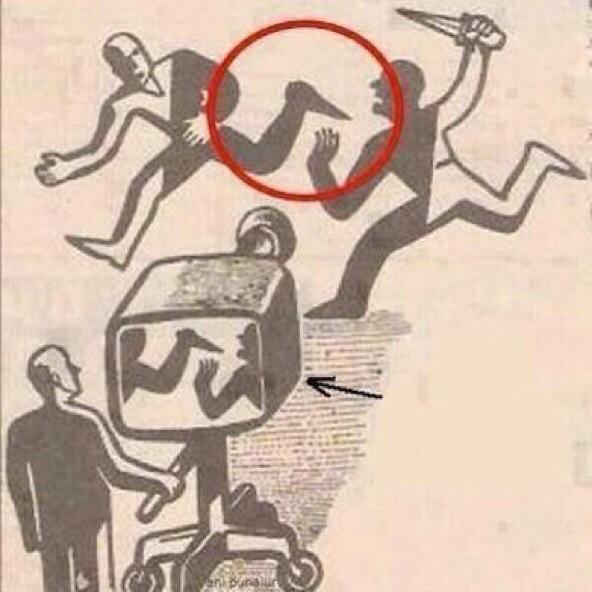
It would be a waste to go to bed on any day without having learned something new. Before going to bed every day, ask yourself “did I learn something new today?” If your answer is no, do not get into bed, pick up a book, browse the internet or listen to a podcast and learn something. Only then should you allow yourself to sleep. We are learning creatures, the lifelong practice of learning is what makes us humans and our lives worthwhile.

Filed Under: General Interest

Books I Read In February 2015

March 3, 2015 By Tanaka Mutakwa Leave a Comment

February was a good month. I managed to read and complete 5 books. At the end of each month I share with you the books I read in that month. Seeing what someone is reading is like seeing the 1st derivative of their thinking. A lot can be learnt from seeing another person’s reading list. A full list of the books I have read, I am currently reading and hoping to read in the future can be found here: Tanaka Mutakwa’s Book Queue. Let’s get into my February 2015 reading list below.

1) Purple Cow – Seth Godin

purplecow

This is a marketing book. The main lesson is about making the product or service you are offering to the world remarkable. The product must be different to be remarkable. Godin talks about how seeing a Purple Cow is bound to get people curious and excited to find out more. As opposed to seeing the normal brown or black cows that people see everywhere. Your product or service should have a purple cow effect to your potential customers. The book talks about how business has changed and the old mass marketing techniques are mostly just expensive and do not work anymore. Godin reasons the madness in mass marketing is better spent in making a better product which in turn promotes and sells itself. A great book for anyone launching a product or service.

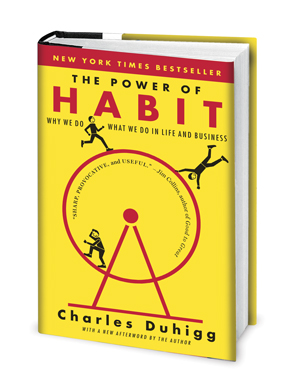
2) The Power of Habit: Why we do what we do in life and business – Charles Duhigg

thepowerofhabit

To master anything, you need to understand it from first principles. Our habits have a significant impact on what we do in our daily lives. Duhigg’s Power of Habit offered a staggering statistic about our lives: 40% of what we do is habitual. 40 percent! That means that a huge majority of what we do in our lives is practically unconscious and habitually helping us progress or digress. We should all be forming new good habits and changing old bad habits. This is a great book, and the reason for that is because it uses research to explain how habits are formed and changed. The whole theory lies behind the “Habit Loop”, which is cue, routine, reward. The cue makes the brain find the routine as it anticipates the reward. A classic example is stress and smoking, the cue is stress, the routine is smoking, the reward is the feeling the cigarette brings. To change a bad habit you need to keep the cue and reward, but change the routine. The book has examples of the effects of habits in individuals, organisations and communities.

3) The 50th Law – Robert Green & 50 Cent

the50thlaw

I always enjoy Robert Greene’s books. He writes books that are easy to read and they are backed by great research. Mastery and 48 Laws of Power are some of his other great books. In the 50th law, Robert Greene teams up with rapper / entrepreneur 50 Cent (Curtis James Jackson). Essentially this book is about overcoming fear with the backdrop story being the life of the rapper / entrepreneur.

The greatest fear people have is that of being themselves. They want to be someone else. They do what everyone else does even if that doesn’t fit where and who they are. But you get nowhere that way; Your energy is weak and no one pays attention to you. You are running away from the one thing that you own – what makes you different.

50 Cent defied all odds from an early age and even though he was set back, shot at, threatened, he never backed down from life and living what he believed his destiny. Powerful and life-altering lessons can be drawn from his experience and that is where Robert Greene comes in and points them out.

4) The Go Giver: A little story about a powerful business idea – Bob Burg & John David Mann

gogiversmall

This was a very quick read but a powerful one. I think I will be giving this book out as a gift quite often. It is also a book you want to read multiples times in your life, to remind yourself of the great lessons.

Most people have that reaction. In fact, most people just laugh when they hear that the secret to success is giving. Then again, most people are nowhere near as successful as they wish they were.

The book teaches the Five Laws of Stratospheric Success.

  1. The Law of Value
    Your true worth is determined by how much more you give in value than you take in payment.
  2. The Law of Compensation
    Your income is determined by how many people you serve and how well you serve them.
  3. The Law of Influence
    Your influence is determined by how abundantly you place other people’s interests first.
  4. The Law of Authenticity
    The most valuable gift you have to offer is yourself.
  5. The Law of Receptivity
    The key to effective giving is to stay open to receiving.

These five laws are taught through the story about a salesman named Joe, who wants to succeed in a big way, realises that he is not doing as well as he wishes. In a moment of desperation, he asks a colleague for the name of a man who he thinks may help him. When Joe meets with the man, nicknamed The Chairman, he is in for a big surprise. Over the course of a week, he learns a different lesson every day. He commits to practicing each lesson at least once each day.

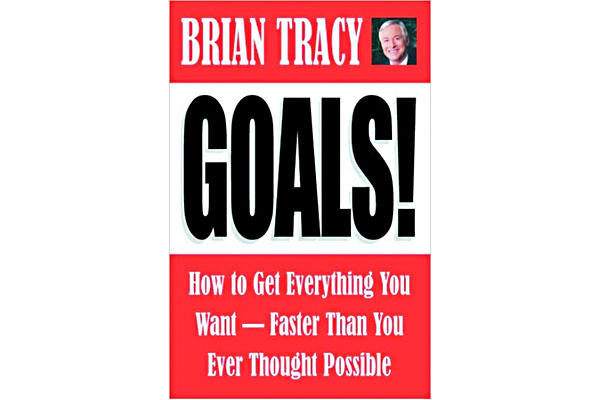
5) Goals – Brian Tracy

goalsbook

I read this book after a recommendation from a mentor. The book is great as a practical resource to readjust your focus and attitude. If you are interested in regaining purpose in your day to day life, this book really helps with that. In this book Tracy discusses the importance of goal setting and what a difference it can make to achieving what it is you want in life. His advice is clear, concise and easy to follow. One of the most interesting things I took from the book is that you should write down your goals everyday. This allows your mind to think about them everyday and keep focused on how to achieve them. I am keen to see how this has an impact on my life in the long run. Don’t just float through life!

A goal, however, is something distinctly different from a wish. It is clear, written, and specific. It can be quickly and easily described to another person. You can measure it, and you know when you have achieved it or not.

That was it for February. I will to continue learning more in March. As they say, knowledge is power.

Keep learning, never settle!

Filed Under: General Interest

  • « Previous Page
  • 1
  • …
  • 3
  • 4
  • 5
  • 6
  • 7
  • …
  • 12
  • Next Page »